christmas light show marketing

Christmas light show marketing. Your weeknights are the business.

Your two weekends before Christmas sell out on their own. Christmas light show marketing that's worth paying for goes after the other thirty nights, the ones with the lights on, the staff paid, and half a lot. That's the work we do. Run by people who've stood in a ticket booth in twenty-degree weather, not an agency reading about agritourism off a slide deck.

Book a free season plan call Or get a free Google audit first

20 minutes. You leave with a written plan for your season, whether or not you hire us.
Month-to-month, always. No contract running through your spring.

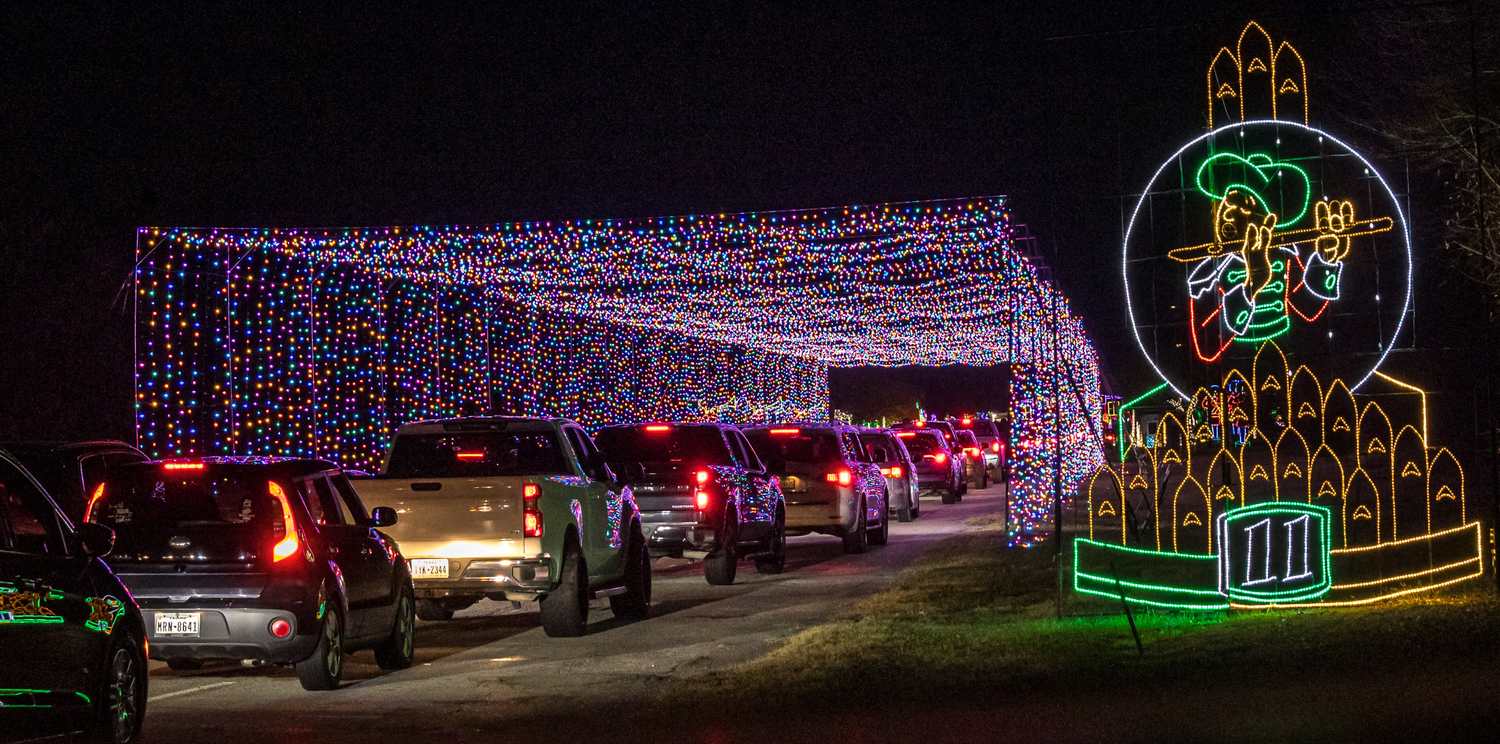
Cars moving slowly through a drive-through Christmas light show, lit tunnels and arches on both sides of a farm lane at night
a drive-through show mid-run — the format people search for by name
the problem

Your light show has forty-five nights. Twelve of them sell without you.

You open somewhere around mid-November. You run to New Year's. Call it forty-five nights, and unlike a pumpkin patch, every single one of them is a revenue night.

Here's what actually happens to those nights. The two weekends before Christmas sell out whether you market or not. December 26 through 31 fills with families who have relatives in town and nothing to do. That's your twelve. Then there's a Tuesday on December 3, a Wednesday on the 11th, a Monday on the 18th, and about thirty more like them, and those nights are where your entire margin lives. The lights are already up. The staff is already scheduled. The power bill is the same whether four hundred cars come through or eighty.

Most shows market the season. The season doesn't need it. The weeknights do.

And there's the other thing nobody says out loud. You're competing with free. Every metro has a neighborhood people drive through for nothing, a mall display, a tree lighting downtown, a church holiday display with a donation bucket. When somebody searches for Christmas lights near them, a lot of what comes back costs zero dollars. You're not just trying to be findable. You're trying to be the answer that's worth paying for.

the shape of the season

Christmas light show search starts at Halloween and dies on January 1

Four things are true about how people find a light show, and every one of them changes what the marketing has to look like.

It's a longer runway than fall, and people buy ahead. First searches show up around Halloween. Real climb starts Thanksgiving week. Peak runs roughly December 10 through 22. On January 1 it's gone. But because most shows sell timed entry, people are buying three days to two weeks out instead of deciding in the car. That gap is the whole opportunity, and it's the opposite of how a pumpkin patch works.

Black Friday weekend is a real revenue event. Gift buying, group bookings, families locking in a night before the calendar fills. If you're not selling into that window with something in market, you're leaving the easiest money of your season on the table.

The format is part of the search. People type drive thru christmas lights near me. Walk through christmas lights. Christmas lights you can walk around. A few type holiday lights instead, and your listing should cover both. If your listing and your page don't say clearly which one you are, you lose the people who wanted the other thing and you annoy the ones who show up expecting the wrong experience. That shows up in your reviews, which is the next problem.

Reviews about wait times decide this more than photos do. Nobody abandons a light show over mediocre pictures. They abandon it over three reviews mentioning a ninety-minute line in the car with kids in the back seat. Queue reputation is a marketing asset in this vertical in a way it isn't anywhere else.

Which is why none of this starts in November.

Google needs weeks to months to index new pages and build enough trust in a business profile to rank it locally. Build in November for December and you've built for next year. There's a second reason it's worse for light shows than for anyone else: your profile goes quiet for ten months. No posts, no fresh photos, no new reviews, hours marked closed. Then you flip it on in November and expect it to rank against businesses Google has been watching all year. It doesn't work like that, and fixing it is off-season work.

the method

What Christmas light show marketing actually looks like, in order

Order matters more than any single piece. Most shows have this backwards and it's why the money disappeared last time.

01

Timed ticketing, and a page that says which kind of show you are

Timed entry, priced by night, so a Saturday doesn't cost the same as a Monday and you can actually move people into your empty slots. Drive-thru or walk-thru stated in the first line, not the fourth paragraph. How long it takes. What happens if it rains. Whether you can stay in the car. Those four answers on the page kill most of your refund requests and half your DMs.

A phone held in a car showing a timed-entry booking screen with selectable arrival slots, the glow of a drive-through light show ahead through the windshield
timed entry, bought ahead — not decided in the car

How we handle Google Search →

02

The Map Pack, where your hours change nightly

Light show hours are a minefield. You're open nightly, you're closed Christmas Day, you have a different time on Christmas Eve, and New Year's is its own thing. Wrong hours on Google on December 24 is a night you don't get back and a review you can't remove. We keep them right. We also fix the photos, because night photography is genuinely hard and most light show listings are a blurry orange smear that sells nothing.

Then the profile stays alive in the off-season instead of going dark for ten months.

How we handle the Map Pack →

03

Meta ads, for the presale and the empty Tuesday

Last, and only on top of the other two. Ads pointed at a site that can't take a booking are paying to send people somewhere that turns them away.

Once search is holding, ads do two jobs here. The first is the presale, running from early November into Black Friday weekend, selling gift-framed tickets before your calendar is anyone's default. The second is the one that pays for itself: pushing specific soft nights during the run. Nine days out, the 11th is at forty percent, you put budget behind that date and nothing else. That's not a campaign, it's a weekly decision, and it's most of the value.

How we handle Meta ads →

04

The assistant that answers at 11pm

Do we stay in the car. Is it too much for a two-year-old. How long does it take. Can we bring the dog. What if it's raining. It's the same forty questions every season and they arrive at nine and ten at night, which is exactly when your team is running the show and nobody's on the phone. An assistant wired into your ticketing answers them and books the slot while it's still warm.

How the assistant works →

proof

Light shows and farms we've done this for

drive-through · western pennsylvania

A drive-thru show outside Pittsburgh running roughly forty nights, where the weekends were already full and the Monday-to-Thursday run was carrying the losses. The work was timed entry priced by night, a profile that stopped going dark in January, and ad budget moved onto specific soft dates rather than the season.

walk-through · mid-atlantic

A walk-through display in Maryland that ranked for its own name and almost nothing else. Non-branded terms and the drive-thru-versus-walk-thru distinction had never been made anywhere a search engine could read it, which was costing them the visitors who wanted exactly what they had.

We won't promise you a ranking or a revenue number, and you should walk out on anyone who does. What we'll tell you is what we've seen the method do, and roughly ~20% more tickets over a prior-year baseline is the number we're comfortable standing behind.

working together

How working together actually works

Month-to-month. Scale up for your on-season, pause when the lights come down. No agreement running through your off-season while nothing's happening.

Weekly calls with the person doing the work. Not an account manager reading you a dashboard.

Tickets are the only number we report. Not impressions. Not reach. Not engagement.

How we're paid. A one-time build for the site, a monthly retainer while we're running, and a share of the ticket revenue above your prior-year baseline. We lock last year's number first, so the only thing we get paid on is the part we added.

We take a handful of holiday shows per season. Not because of a countdown timer. Because it's how many accounts a small team can run well, and an account manager instead of a partner is exactly what you didn't want.

Two people in winter coats at a wooden ticket booth at the entrance to a holiday light show, breath visible in the cold, string lights glowing behind them
the gate on a cold Tuesday — the night this page is about
straight answers

What light show operators ask us first

When do we need to start for this season?

+

Spring or summer, and for a light show that's more true than for anyone else. Your profile sits dormant most of the year, so there's ten months of ground to make up before Google trusts you enough to rank you in December. Starting in October means you're building for next year. We'll tell you that instead of taking the money.

We already sell out our weekends.

+

Almost every show we talk to does, and it's the reason this gets missed. Your weekends aren't the business. Thirty-odd weeknights with the lights on and the staff paid are the business, and they're the nights nobody is marketing because the season looks healthy from the weekend numbers.

We already rank when I Google our show's name.

+

That's branded search, and it's the people who came last year. It doesn't grow anything. The people who've never heard of you are typing drive thru christmas lights near me, and that's a different fight.

Do we need a new website?

+

Sometimes no. If yours loads fast on a phone, sells timed tickets, and says clearly what kind of show you are and how long it takes, we'll work with it. If it doesn't do those things, ads just send more people somewhere that loses them.

We tried an agency before and it didn't work.

+

Usually one of two things. They ran ads at a site that couldn't close, or they reported impressions because tickets weren't moving. We report tickets. If tickets aren't moving you'll hear it from us before you see it in your own numbers.

Are you going to lock us into a contract?

+

No. Month-to-month, a real one, not twelve months with an exit fee. You run a six-week business and paying an agency in April for nothing is how operators get burned.

We're not only a light show. We do a fall season too.

+

Good, and most of our shows do. A venue that runs fall and Christmas has a real advantage, because the work that ranks you in October keeps your profile warm going into November. The plan covers your calendar, not one season.

How much does it cost?

+

The structure is up above. The actual number depends on the state of your site and the size of your run, and we'd rather give you a real one on a 20-minute call than a fake range on a webpage. The performance piece doesn't start until you're above last year.

the rest of your calendar

Related: other seasons we run

A venue that runs fall and a holiday season keeps its profile warm all the way through. The plan covers the calendar, not one season.

live
Pumpkin patch marketing

Four October weekends, decided on a phone in the car.

building
Corn maze marketing

The same October cliff, but evening demand and an older crowd.

building
Winery event marketing

A year-round base with event spikes, and a different buyer entirely.

building
U-pick marketing

Multi-crop and rolling, where repeat visits are the whole model.

planning now for the coming season

Let's fill your Tuesdays.

Book the call and you leave with a written plan for your season whether you hire us or not.

20 minutes · a written plan either way · month-to-month, always